Solve Sickle Cell Initiative
Georgia's Solve Sickle Cell Initiative (SSCI) aims to leverage the state's considerable strengths in university research and healthcare, and break new ground in knowledge, treatment and cures.
What SSCI Adds
Organized and executed by GRA, this five-year, $16 million endeavor unites Morehouse School of Medicine, Emory University and Children's Healthcare of Atlanta by adding:
Mindpower
GRA Eminent Scholar Solomon Ofori-Acquah, a leading expert in the disease, leads the initiative. GRA Distinguished Investigator Francesca Vinchi pursues therapies to improve treatment of sickle cell disease. Both were recruited to Georgia to lead a carefully coordinated research effort to advance progress toward breakthroughs in SCD.
Lab infrastructure
While Georgia's university labs are generally well-equipped, crucial pieces of technology and instrumentation are needed to support the research of newly recruited scientific teams.
Clinical and market translation
The footprint of treatment at Children's Healthcare of Atlanta will expand so that clinicians can evaluate new approaches developed by Georgia's university scientists. Companies will be seeded and shaped around high-potential inventions emerging from the labs.
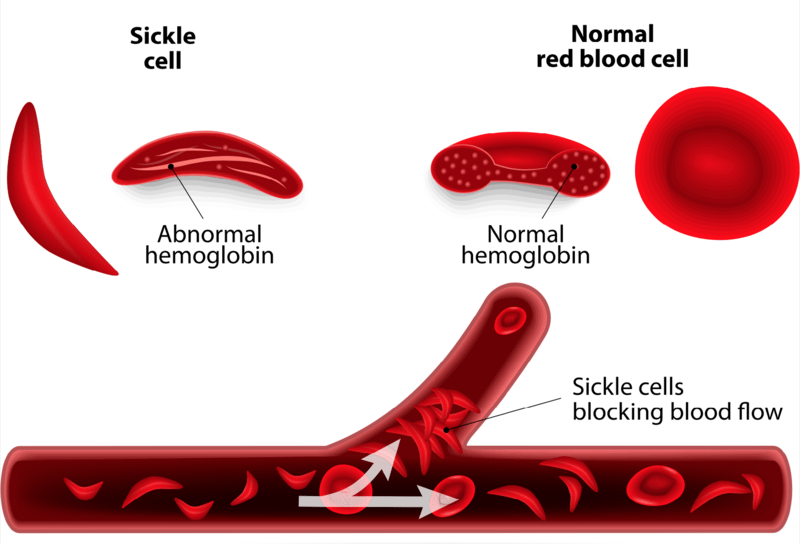
Sickle cell disease is an inherited blood disorder in which damaged hemoglobin can't deliver oxygen to cells in the body. It afflicts millions of people worldwide.
About Sickle Cell Disease
The need for new approaches is clear. Typically diagnosed around 5 months of age, sickle cell disease brings a lifetime of sudden events, from searing pain in hands and feet to hemorrhaging and stroke.
The disease is an inherited blood disorder, manifest by two genes (one from each parent) that together bring about abnormal hemoglobin. For a person with sickle cell disease, red blood cells are not all smooth disks that glide and flow easily through the bloodstream. They become hard, spiky crescents, and when these sickles clump together, blood flow is impeded.
Why Georgia?
Georgia has the third-highest incidence of sickle cell disease in the U.S. Currently, 124 census tracts in our state have high rates of incidence and are medically underserved areas. But Georgia also has an extraordinary foundation of university research and clinical care in the disease.
Children's Healthcare of Atlanta
Children's has the nation's largest pediatric sickle cell disease program: the Aflac Cancer & Blood Disorders Center, with 2,000 unique patients treated annually. Children's also performs 70+ blood and marrow transplants per year, with 116 children cured of SCD, and provides a robust cell and gene therapeutics program.
Emory University
Emory attracts $5.4 million in annual funding for SCD research, including eight NIH grants, and is leading an international study on long-term outcomes of blood and marrow transplants for SCD patients. Emory offers comprehensive clinics, transfusion services, specialty clinics and inpatient care, and manages a unique database on health outcomes for 2,600+ SCD patients.
Morehouse School of Medicine
Morehouse brings deep expertise in implementation science to promote the adoption of evidence-based practices in SCD treatments and research participation, along with genomics and hemoglobinopathies training and pediatrics physicians on staff at Children's Healthcare of Atlanta (Hughes Spalding Hospital).
Other Georgia Assets in the Fight
The Georgia Comprehensive Sickle Cell Center at Grady Hospital
The world's first 24-hour acute care center for adult patients with sickle cell disease.
GRA Eminent Scholars
12 GRA Eminent Scholars at Georgia universities engage in research related to sickle cell disease.
The Sickle Cell Center at Augusta University
A multi-disciplinary center for research and treatment.
The Health Policy Center at Georgia State University
Provides policy guidance for the initiative and the state.
The Sickle Cell Disease Foundation
Connects SCD patients and families to social services.
The Atlanta Sickle Cell Consortium
Unites physicians and researchers to coordinate efforts to advance treatments and develop cures.

GRA's Solve Sickle Cell Initiative fights the painful, debilitating disease by adding research talent, laboratories and clinical space in Georgia. Georgia has the third-highest incidence of sickle cell disease in the U.S.
The Goal
GRA designed Georgia's Solve Sickle Cell Initiative to bring an infusion of tens of millions of dollars in new private and public research grants to support the work of newly recruited scientists; significant new insights into, and potential new treatments for, sickle cell disease; the launch of new private enterprises to bring inventions and discoveries to the clinic and marketplace; and an elevation of Georgia's influence and profile for taking a leadership position against a critical health threat.
GRA launched the statewide initiative in May 2021 at a news conference in Columbus, where Gov. Brian Kemp announced the initiative and the creation of the Calvin Smyre GRA Eminent Scholar chair, an endowed chair, with Rep. Smyre on hand.
Get GRA Notes
GRA Notes is a monthly e-newsletter with quick takes on university research and entrepreneurship in Georgia.
Support GRA
Gifts from people, companies and foundations fund GRA's operations and grow Georgia's economy through university research.